Will It Blend? How Blendtec Turned Sawdust into a Hit
Blendtec's Will It Blend? began with sawdust and a $50 test. Learn how to notice overlooked work, test an idea, and judge a viral success story carefully.
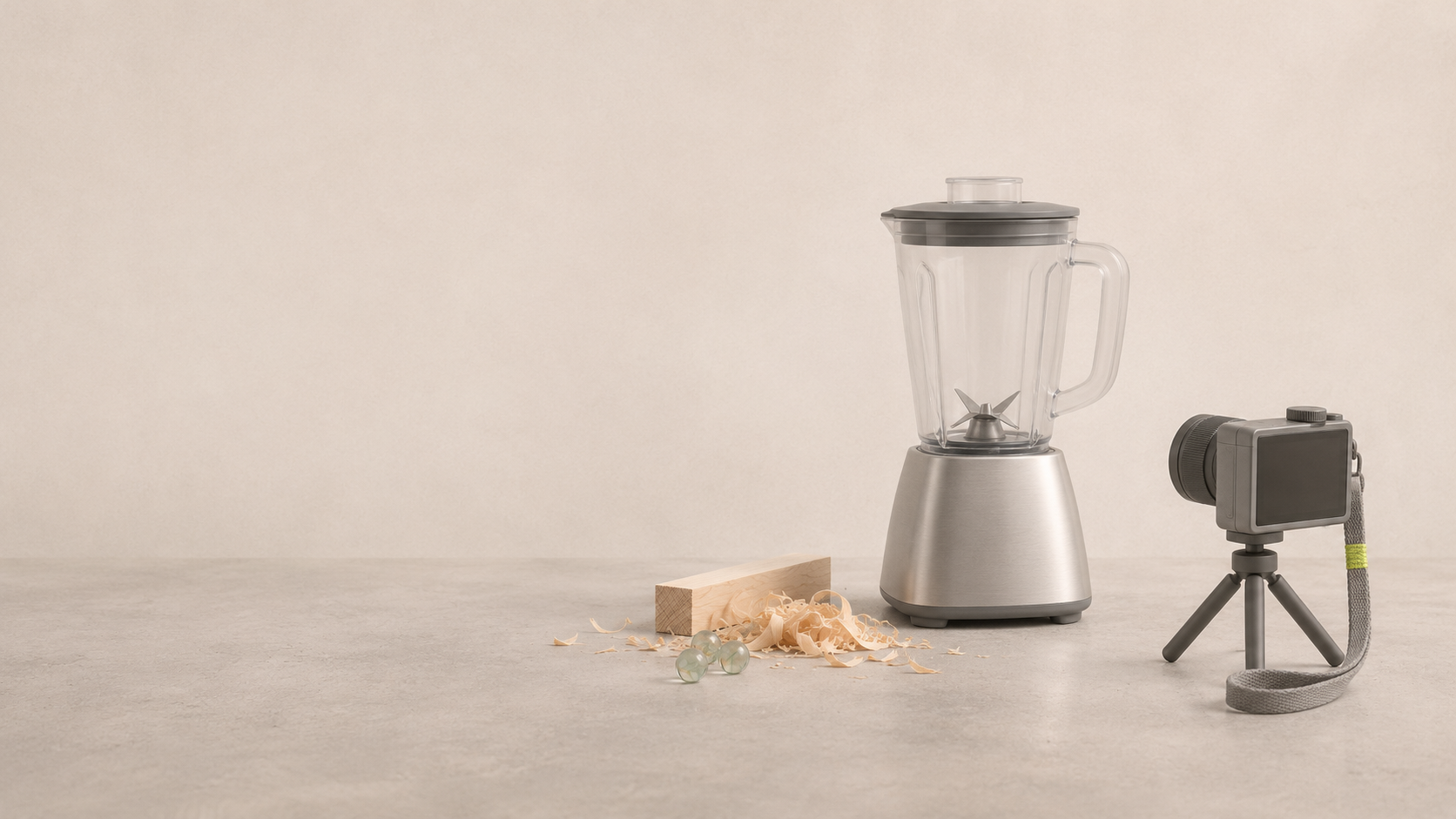
Sawdust on a blender factory floor is easy to treat as mess. George Wright treated it as a question.
The answer was that Blendtec's founder, Tom Dickson, had been feeding wood into his machines to test them. What looked routine to people inside the company suggested something different to its marketing director: a demonstration other people might want to watch.
The Will It Blend? story offers a useful way to think about creativity. Sometimes the opportunity begins with recognizing the interest in work you already do.
Will It Blend? began with an existing routine
In Inc.'s interview with Wright and Dickson, Wright recalled encountering the founder's unusual testing. Longtime employees were accustomed to it. For someone new to the company, the contrast between a familiar kitchen appliance and a wooden board was striking.
The machine and the activity already existed. Wright's contribution was to recognize a possible audience for them.
A 2009 account in BYU Magazine says he spent $50 on a lab coat, marbles, a rake, golf balls and other props. The ordinary durability test could become a small production with a recognizable person, surprising objects and a camera.
That distinction gives both men their place in the story. Dickson supplied the engineering and the unusual routine. Wright recognized a way to present them. Recognizing an opportunity and doing the underlying work were different contributions that needed each other.
The demonstration gave viewers a question
Blendtec's own retrospective describes the early videos as simple, with little elaborate comedy or dialogue. It identifies marbles as the first blend posted. The filming task was to make Tom's demonstrations interesting.
There was a visible transformation to follow: an object entered the jar and emerged as fragments or powder. Viewers could understand the setup before knowing the outcome.
One way to interpret the format is that it joined a product demonstration to a question worth answering. A statement about blender power asks an audience to accept a claim. An unexpected object beside the machine offers a concrete question: what will happen?
That is an interpretation of the format, rather than a measured explanation of why each viewer shared it. The useful design choice is still visible. The product's performance was part of the entertainment itself.
There was craft in the presentation. Choosing the objects, framing the shots and giving the demonstration a repeatable premise made the routine understandable outside the workshop. Noticing supplied the possibility; presentation made it shareable.
Put the $50 and the big numbers in context
BYU reported roughly six million views in the first week and said the campaign helped lift retail blender sales by 700% within two years. These were reported historical results, not a controlled comparison proving how much growth the videos alone caused.
The budget also needs a clear boundary. The purchased props were a cheap way to try a presentation. That figure should not be treated as a complete accounting of the product development, equipment, expertise and staff time behind it.
A small cash outlay can draw on substantial existing resources. The useful question is which resources are already available and what you could learn by using them differently.
The later success makes the first step look inevitable. At the time, filming a destructive blender test was an uncertain experiment. A famous winner cannot tell us how often similar attempts fail, or what audience another attempt would find today.
Use the story to identify a possible mechanism and a testable question. Keep the extraordinary result attached to the particular company and circumstances that produced it.
Look for work you have stopped seeing
The raw material for a good idea can be an action you have stopped noticing.
Think about a repair you perform, a distinction you explain, a mistake you catch or a comparison you make almost automatically. To someone without your experience, the steps may be surprising or useful.
Ask a newcomer what they find confusing or unexpected. Their questions can reveal where familiarity has hidden the interesting part from you. Then record the concrete action before turning it into a broad lesson.
There is a related habit in Feynman's wobbling plate and useful curiosity: giving an ordinary observation enough attention to become a question. That connection does not promise a major discovery. It suggests looking closely before deciding what an observation is worth.
Our account of Airbnb's first guests and an urgent need adds another question: who has a reason to care now? Existing resources become an opportunity only in relation to an audience or situation. An unusual activity can attract attention without solving anyone's problem.
Turn the observation into a small test
Try this exercise with one ordinary part of your work. Keep the first version small enough that an uninteresting response can change your next decision.
- Describe the observation. Write what actually happens, without adding a success story around it.
- Choose an audience question. Decide what a particular person might want to see explained or demonstrated.
- Make a simple presentation. Show one example with a clear beginning and outcome. Keep the result honest.
- Define a useful response. Decide what you will look for, such as someone explaining the idea back, asking for another example or trying the method.
Suppose you routinely spot errors in spreadsheets. One possible test is a short screen recording showing an incorrect result, the clue you noticed and the corrected formula. Share it with a few colleagues and ask what they understood.
That would investigate whether your explanation helps an audience. It would not establish demand for an entire course. A puzzled response might point to missing context; an indifferent one might suggest choosing a different problem.
This is the same practical discipline behind testing a local business idea before investing. The questions differ, but both approaches bring outside evidence into a decision while the cost of changing direction is still low.
A small test earns its value by making the next decision clearer.
Save the mechanism with the story
If you keep this example in a learning journal or Second Brain, attach a question to the memorable facts. A note that says “Blendtec went viral for $50” is easy to remember but leaves out much of what made the case useful.
Record the existing activity, the new framing, the audience response and the limits of the evidence. Then ask where a similar relationship might exist in your own work. This keeps a story available as a thinking tool without treating it as a recipe.
Before searching for a completely new idea, spend a few minutes looking at a familiar action with a newcomer's attention.
What happens in your work every week that someone else would stop to watch?
Sources and further reading
- BYU Magazine: Will It Blend? — the sawdust discovery, purchased props, reported first-week views and two-year retail sales increase.
- Blendtec: The Story Behind Will It Blend? — the filming perspective, simple early format and first posted marbles demonstration.
- Inc.: Confessions of a Viral Video Superstar — the interview with Tom Dickson and George Wright about the origin, budget and presentation.