The Dark Side of Second Brain Apps: Digital Hoarding
Second Brain apps make saving effortless - but saved notes often become digital clutter. Learn why retrieval, recall, and review matter more than storage.
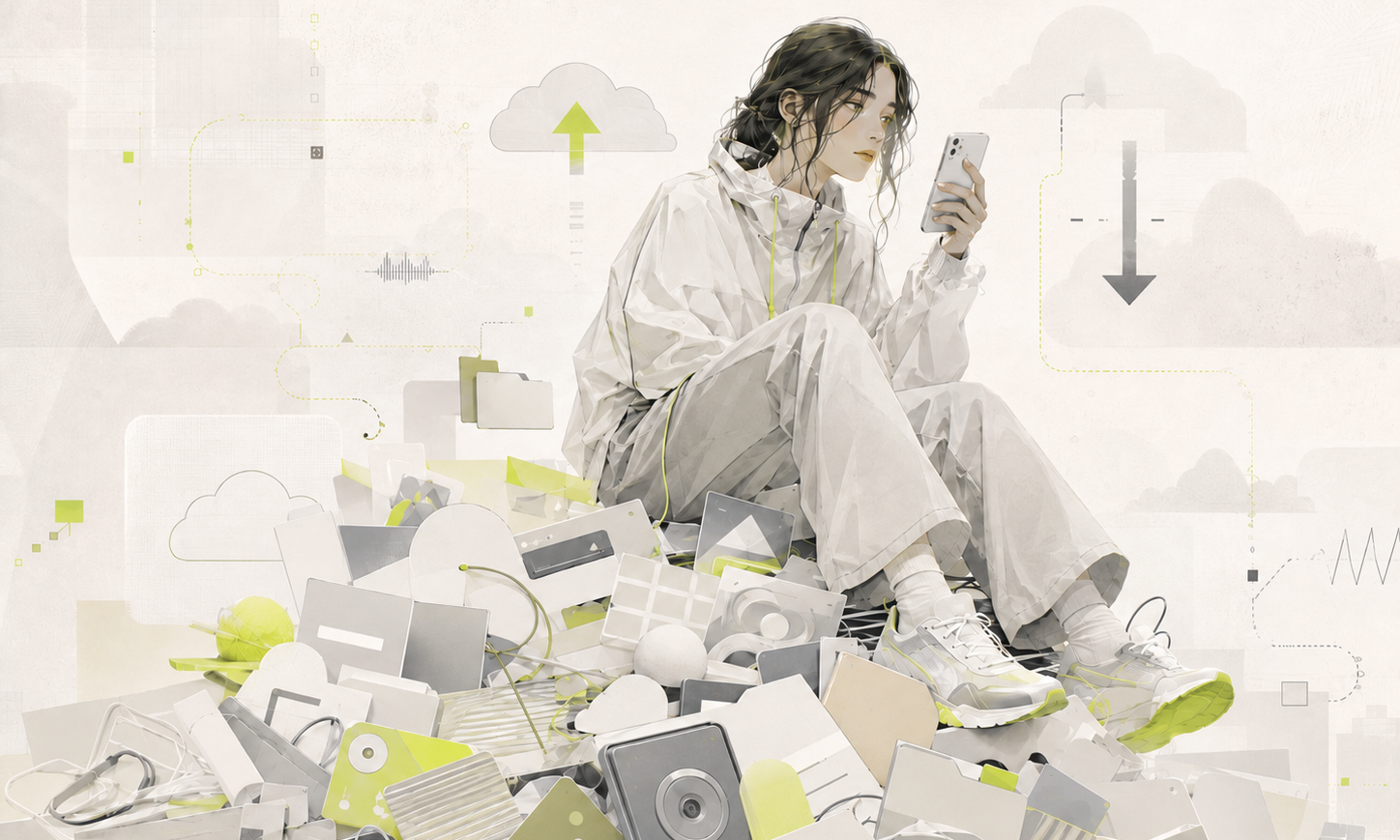
Second Brain apps promise to help us capture everything we learn.
Articles. Book highlights. Notes. PDFs. Screenshots. Random ideas we might need “one day.”
So we keep saving.
Every useful quote goes into a notes app. Every interesting article gets bookmarked. Every screenshot disappears into another folder.
It feels productive because the library keeps growing. Everything looks organized, searchable, and safely stored.
But there is a problem:
We rarely use most of it again.
Saving knowledge is not the same as learning it
Saving is easy. Learning is not.
A highlight you never revisit is not really part of your knowledge. A note you cannot recall is still just stored text. A PDF inside a beautifully organized folder does not automatically help you understand the subject.
This is the dark side of Second Brain apps:
Digital hoarding.
Saving something creates a small feeling of progress. But much of that information becomes invisible almost immediately.
Your library looks intelligent, while your First Brain stays almost exactly the same.
It is productivity theatre.
Or, more accurately:
storage cosplay.
A prettier junk drawer is still a junk drawer
There is nothing wrong with storing information.
We need somewhere to keep books, PDFs, recordings, links, images, notes, and ideas. A Second Brain can make that material easier to organize, search, and return to later.
But storage should only be the first step.
A real Second Brain should not simply remember things instead of you. It should help you understand and remember them too.
Knowledge starts becoming useful when you:
- revisit it;
- retrieve it without looking;
- connect it to another idea;
- notice what you misunderstood;
- and use it in a real situation.
Without that loop, a Second Brain is mostly an archive.
The real problem is not capture. It is return.
Imagine reading a book.
By the time you reach Chapter 8, many ideas from Chapter 1 already feel blurry. You may recognize them when you see them again, but recognition is not the same as recall.
The same thing happens with saved articles and notes.
You remember that you saved something useful. You may even remember the app or folder where it lives. But you cannot remember the actual idea when you need it.
So you search for it again.
The usual loop looks like this:
read → save → forget → search again
That is an external storage system, not a learning system.
A better loop is:
save → review → recall → connect → use
The missing layer is not another folder, tag, or AI summary.
It is retrieval.
Why flashcards can complete the Second Brain loop
Flashcards are useful because they ask your brain to do something.
Instead of seeing a familiar sentence and thinking, “Yes, I know this,” you have to produce the answer.
That small difference changes the relationship with your saved material.
A note stops being something you once captured. It becomes something you can test, misunderstand, revisit, and eventually use.
This does not mean every sentence should become a flashcard. The goal is not to memorize your entire library.
The goal is to bring back the ideas that matter before they disappear.
That is the thinking behind Grasply’s Learning Feed.
In Remember Mode, you can choose saved notes, PDFs, books, audio, tags, individual Library items, or a wider collection. Grasply turns the selected material into focused review cards, helping old ideas return instead of staying buried.
In Explore Mode, you can begin with a topic, question, or idea and move through connected concepts. One card can lead to a neighboring idea, creating a path through a subject rather than a static pile of information.
The important part is not the feed itself.
It is the return.
Your saved knowledge becomes active again.
Your Second Brain should strengthen your First Brain
AI has made it easier than ever to get an immediate answer.
But an answer is not the same as knowledge.
You can ask AI to summarize a book, explain a concept, or solve a problem. But when you understand the subject yourself, you ask better questions. You notice weak answers. You connect ideas that someone without that knowledge would miss.
The purpose of a Second Brain should not be to make your First Brain unnecessary.
It should reduce the effort of organizing information while increasing the amount you genuinely understand.
Your Library stores the knowledge.
Your learning system brings it back.
Your brain decides whether it stayed.
Knowledge does not become yours when you save it.
It becomes yours when you revisit it, recall it, connect it, and use it.
A real Second Brain should not be a prettier junk drawer.
It should refresh your First Brain.