Why Great Stories Break a Character’s Comfort Zone
Learn why moving characters beyond their comfort zones creates conflict, generates scenes, exposes flaws, and transforms a promising premise into a story.
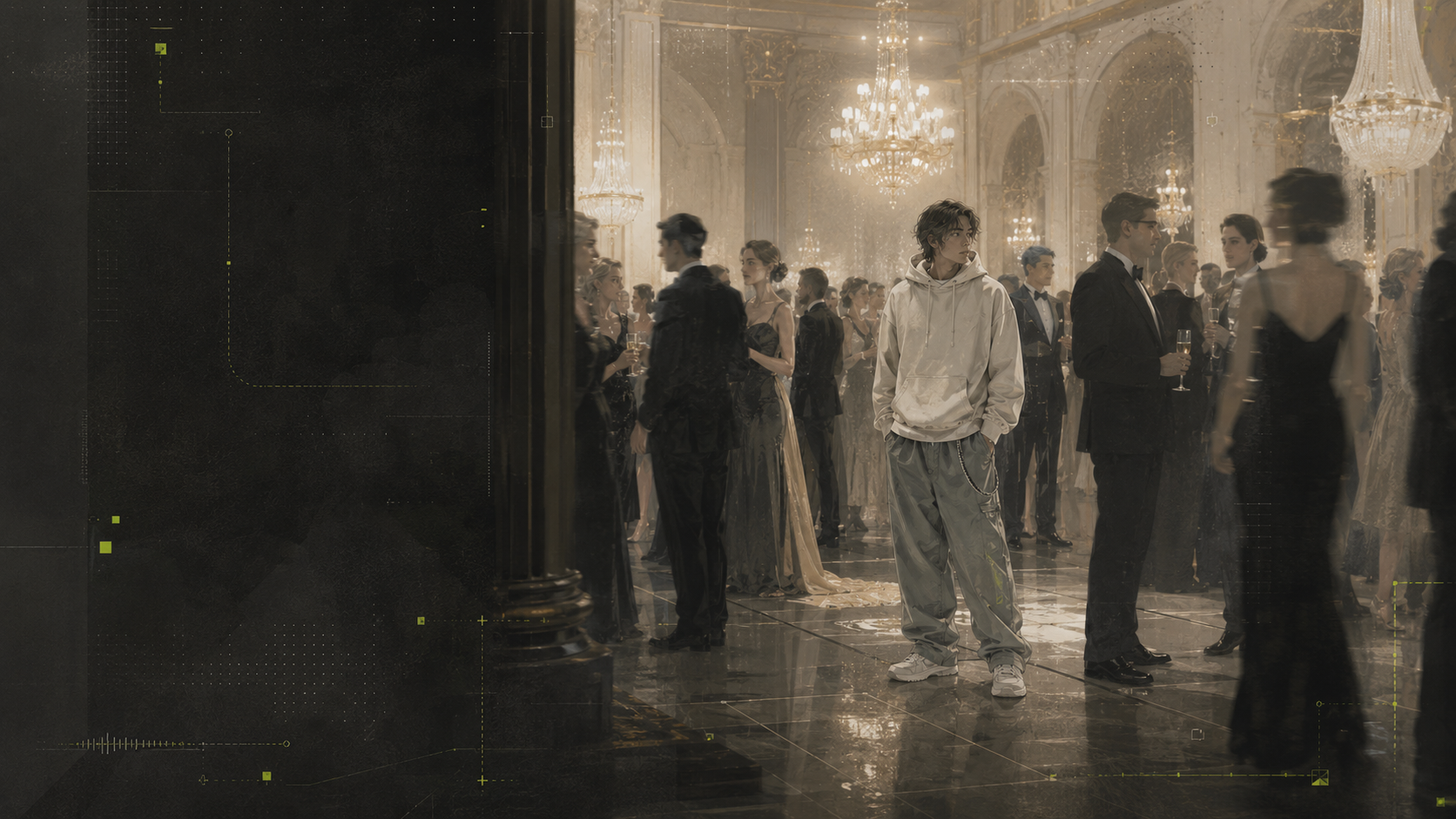
A rat with a refined palate living in a sewer is a clever premise. Put him beneath a gourmet restaurant—where cooks, inspectors, and customers can expose him—and the premise begins generating scenes.
The difference is not simply a better location. It is pressure. Remy enters a world built around everything he wants, yet that world has rules designed to exclude exactly what he is.
That is the hidden power of the character comfort zone: break the system that once made someone competent, and the story starts moving.
A character’s comfort zone is really a survival system
A comfort zone is often treated as a soft psychological idea: the familiar place where someone feels safe. For storytelling, it is more useful to think of it as a survival system.
Inside the old world, a character knows which behavior earns respect, what dangers to avoid, whom to trust, which skills solve problems, and what they can safely hide.
They may hate the old world, but they understand its operating system.
Pixar’s collaborative Pixar in a Box storytelling course describes story as an interaction between world and character. Its character lessons focus on wants, needs, obstacles, stakes, and arcs. That combination matters because a world is not merely scenery. It is an environment with rules, and those rules decide whether the character’s usual behavior still works.
A setting becomes dramatic when it makes a character’s competence expire.
Before the disruption, the audience needs to see the baseline. What does this person do well? What gives them status? Which routine keeps them safe? Contrast becomes meaningful only after we understand what has been lost.
Why these three films share the same dramatic engine
The Intouchables, The Hunger Games, and Shrek 2 have almost nothing in common on the surface. One is a class-crossing friendship, another a dystopian survival story, and the third a fairy-tale comedy.
Underneath, each removes a character from the world where their identity makes sense.
In The Intouchables, Driss moves from the banlieue into a wealthy aristocrat’s world. His old manner and assumptions no longer produce predictable reactions.
In The Hunger Games, Katniss moves from the poorest district into the Capitol’s spectacle. Her survival skills remain valuable, but they are suddenly judged, styled, and televised.
In Shrek 2, Shrek leaves the certainty of his swamp for the royal expectations of Far Far Away. His confidence as an outsider collides with a world in which appearance, lineage, and etiquette determine belonging.
The value is not simply “poor meets rich” or “swamp meets palace.” Competence, status, certainty, and routine disappear together.
Contrast is a scene-making machine
A premise can be original and still remain dramatically inactive. If the protagonist is comfortable inside it, the writer must keep inventing reasons for something to happen.
Contrast reverses that burden. Once the setting conflicts with the character, ordinary interactions arrive preloaded with tension.
Pixar’s official page for Ratatouille describes Remy as a rat who dreams of becoming a chef despite belonging to a family that expects something else—and despite entering a profession that is necessarily hostile to rodents. The gourmet kitchen does not simply look more exciting than the sewer. It turns his identity into a practical problem.
How does he enter? How does he remain unseen? How can his talent affect the food when he cannot openly cook? What happens when the food succeeds? Who receives the credit? What does success cost his relationship with his family?
Each question can become a scene, reversal, secret, or subplot.
That gives writers a useful diagnostic:
If a premise feels flat, do not only add a larger obstacle. Put the protagonist somewhere their existing strengths become unreliable.
The best contrast does not merely increase difficulty. It changes what “capable” means.
The strongest disruption attacks an existing weakness
Random discomfort can produce activity without producing meaning. A sandstorm, a villain, or an embarrassing dinner may create trouble, but trouble becomes character development only when it presses on something already present.
The unfamiliar world should expose a weakness the protagonist could hide at home.
Pixar’s Act 2 storytelling lesson describes progressive complications that force difficult decisions. Pressure matters because it makes the character choose.
WALL‑E begins with a robot whose work is repetitive, peaceful, and lonely. EVE’s arrival gives him what he has been missing—connection—but also destroys the safety of passive longing. He must follow, risk rejection, leave Earth, and act on what he wants.
The situation externalizes an inner need. Loneliness was survivable while nothing changed. Once connection becomes possible, safety becomes a choice with a cost.
This suggests a sharper writing principle:
Do not merely send a character somewhere unfamiliar. Send them somewhere that reveals the weakness their old world allowed them to manage.
Contrast works on three levels
The strongest fish-out-of-water stories usually combine three kinds of mismatch.
1. World contrast
The physical environment changes. Home becomes a palace, a neglected district becomes a televised capital, or a sewer becomes a professional kitchen.
World contrast supplies spectacle and practical obstacles.
2. Social contrast
The character loses their normal standing. Language, etiquette, values, and power structures shift.
A joke that once earned approval may now cause offense. Social contrast turns conversation into negotiation.
3. Emotional contrast
The new situation presses against a desire, fear, flaw, or unresolved need.
This turns a change of scenery into an arc. The character discovers that the identity protecting them may also be limiting them.
The world provides spectacle, its rules create conflict, and vulnerability gives that conflict meaning.
Why discomfort holds the audience’s attention
Suffering alone is not a storytelling engine. A character can endure terrible events without becoming interesting.
What viewers watch for is response.
We recognize the panic of entering a room where everyone else knows the rules. But recognition is only the beginning. Attention grows when the character attempts a course through the problem.
Will they imitate the new world or resist it? Which parts of the old self are worth preserving? What must they learn? What line will they refuse to cross?
Discomfort becomes compelling when it reveals courage, adaptability, desire, pride, or self-deception. We are watching a person choose without the protection of routine.
The new world should offer more than punishment. It needs temptation, opportunity, and the possibility of change.
A practical tool for generating story
When a protagonist feels too comfortable, map these six elements:
- Old world: Where does the character understand the rules?
- Survival system: Which skill, status, habit, or relationship makes them effective there?
- New world: Which environment operates by opposing rules?
- Failure point: What stops working first?
- Opposing person: Who benefits from the new rules or believes the exact opposite?
- Forced choice: What decision can no longer be postponed?
Then repeat the exercise with five radically different environments.
Do not ask which version is most realistic first. Ask where the character’s confidence fails most interestingly and where new questions appear faster than you can answer them. That is often the setting with the most story energy.
For anyone studying films, the framework can become a reusable note or flashcard. Apply it to each movie: identify the old world, broken survival system, and forced choice. Your Second Brain then becomes a collection of comparable patterns rather than disconnected reviews.
Why this idea is easy to pass on
The most useful film analysis gives people a lens they can apply elsewhere.
“Good character arc” is vague. “Their old survival system stops working” is observable. When a trailer moves someone into a new school, family, workplace, city, class, or culture, ask:
- What used to make this person safe?
- What no longer works here?
- What must they become capable of now?
The lens travels because it changes what people notice without requiring film-school vocabulary. Name a film, then fill in four blanks: old world, new world, broken skill, new self.
What contrast cannot do by itself
Not every unfamiliar world creates a compelling story.
Without earlier competence, there is no baseline to disrupt. If the new world attacks nothing personal, the conflict remains mechanical. If the protagonist never chooses, discomfort becomes passive suffering.
Contrast is therefore not a formula for greatness, and it certainly does not appear in every good film in the same form. It is a design tool.
Use it to connect setting with character, external pressure with internal need, and obstacles with decisions.
Great stories do not merely change the scenery. They cancel the warranty on the hero’s old identity.
The moment a character’s old survival system fails, the story begins.
Sources and further reading
- The art of storytelling, Pixar in a Box and Khan Academy
- Act 2: progressive complications and character choices, Pixar in a Box and Khan Academy
- Ratatouille, Pixar Animation Studios
- WALL‑E, Pixar Animation Studios
- The Intouchables, Gaumont
- The Hunger Games series, Scholastic
- Shrek 2, Universal Pictures