United Broke His $3,500 Guitar. Then This Happened.
How Dave Carroll turned an ignored complaint into “United Breaks Guitars,” a viral lesson in storytelling, customer experience, and crisis response.
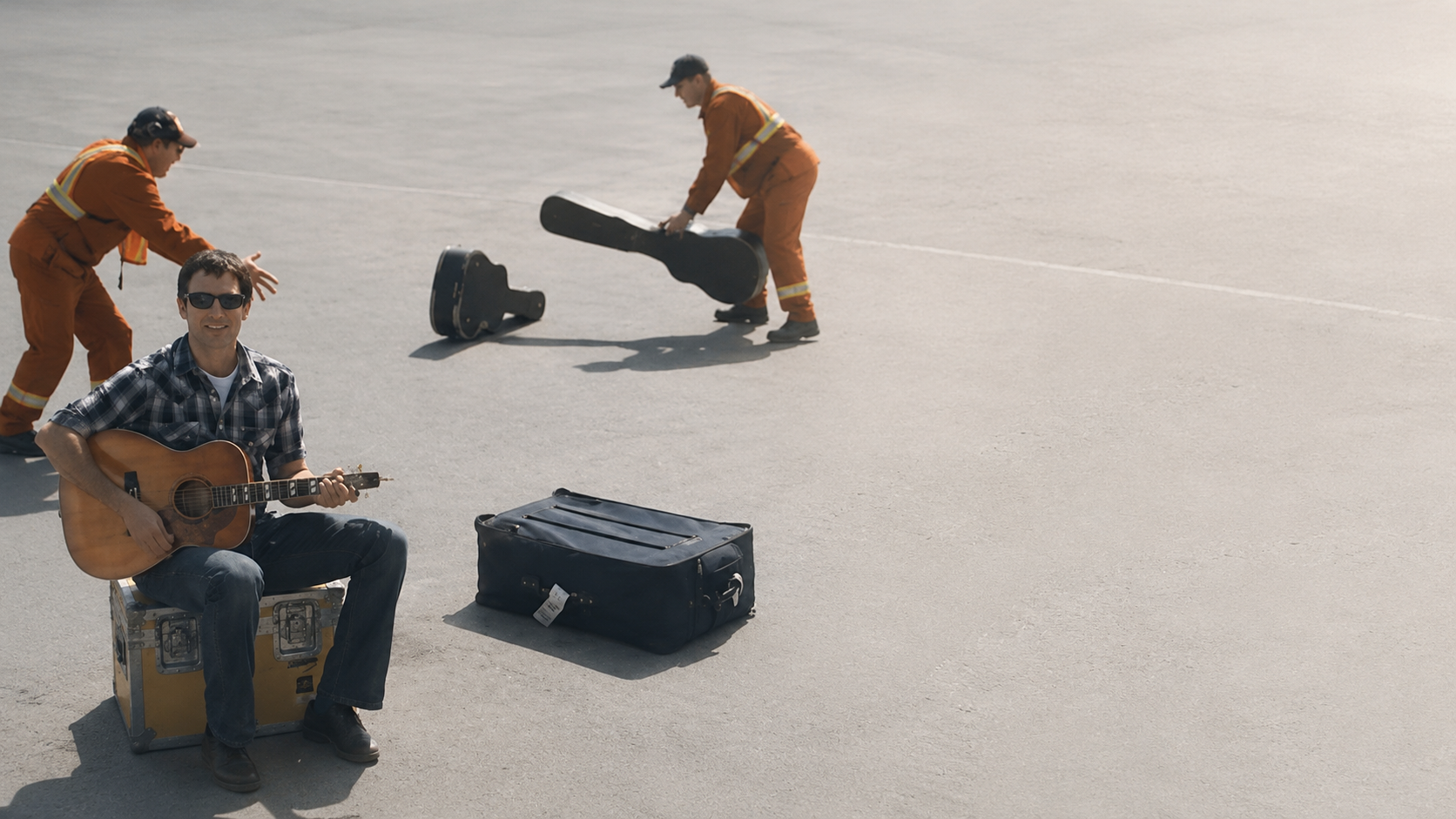
One broken guitar became one of the most memorable customer complaints of the internet age.
In 2008, Canadian musician Dave Carroll was traveling on United Airlines with his band when passengers saw baggage handlers throwing guitar cases during a connection at Chicago O’Hare. Carroll later discovered that his $3,500 Taylor guitar had been damaged.
He spent months trying to resolve the claim. United said no. So Carroll stopped writing complaint emails and wrote something people actually wanted to hear: a song.
Watch our TikTok Slides for this topic
How “United Breaks Guitars” began
Carroll did what customers are normally told to do. He contacted the company, explained the damage, followed the process, and asked for compensation. The problem was not that United never heard from him. It was that the system failed to produce a useful response.
After nearly a year of unsuccessful conversations, Carroll promised to write three songs about the experience. The first, “United Breaks Guitars,” was posted to YouTube on July 6, 2009.
The video told the entire dispute as a light country song. It had a clear problem, a recognizable company, specific details, humor, and a chorus anyone could remember. The production was playful rather than threatening, but the message was unmistakable.
Within days, the video had passed one million views. By the end of July, Harvard Business School’s account of the case says it had reached 4.6 million views, with blogs and news coverage expanding its audience even further.
The complaint that had struggled to move through customer service was suddenly impossible to ignore.
Why the song spread when the complaint did not
A standard complaint is designed for a private process. One customer explains a problem to one employee, usually through a form, email, or call. The audience is tiny, and the company controls what happens next.
Carroll changed the format—and with it, the balance of attention.
His song worked because it compressed a long dispute into a story people could understand in minutes:
- The stakes were concrete. It was not “damaged property”; it was a musician’s $3,500 guitar.
- The conflict was easy to grasp. A large airline would not fix a problem experienced by one customer.
- The hook was repeatable. “United Breaks Guitars” summarized the whole story in three words.
- The tone invited sharing. Humor made the video enjoyable instead of exhausting.
- The format carried emotion. Viewers could feel the frustration without reading a long timeline of calls and policies.
People did not need to study the case before passing it on. The title contained the conflict, and the chorus made it memorable.
That is the difference between information and a story. Information asks the audience to process facts. A story organizes those facts into tension, character, and consequence.
Visibility amplified that structure. Once people could watch others share, quote, and discuss the song, the complaint became a public signal rather than a private dispute. It is the same broader principle behind how observable behavior helps products and ideas spread: what people can see is easier to recognize, remember, and pass on.
United called after the audience arrived
The response changed quickly once the video became public.
United contacted Carroll and acknowledged that the situation should have been handled sooner. In a statement reported by ABC News, the airline called the video a learning opportunity and said it wanted to use it for training so customers could receive better service.
That reversal is the part people remember: the company would not resolve the original complaint, but the complaint eventually became material for teaching employees.
The lesson is not simply that public embarrassment works. Escalating every disagreement into a viral campaign is neither realistic nor constructive. The deeper lesson is that an unresolved customer experience can become a public story—and once it does, the company no longer controls the frame.
Before the song, United was evaluating a claim. After the song, millions of viewers were evaluating United.
Did the video really cost United $180 million?
The most dramatic version of the story says United’s market value fell by $180 million after the video appeared. That figure has been repeated in articles, talks, and social posts for years.
The timing is often presented as proof that the video caused the loss. It is not.
United’s parent-company shares did move around the video’s release, but stock prices change for many reasons—especially in the volatile airline market of 2009. A short-term movement near a viral event does not establish what caused it. Historical prices also show that the stock recovered rather than continuing in a simple $180 million collapse caused by the song.
The careful conclusion is this: the video created a major, measurable reputational event. It attracted millions of views, extensive press coverage, a corporate response, and years of discussion in marketing and business classrooms. The claim that it directly erased $180 million in value has not been proven.
The story does not need the disputed number to be powerful.
What companies should learn from the case
The cheapest moment to solve a customer-service problem is usually before it becomes content.
That does not mean automatically granting every request. It means designing a process that can recognize legitimate problems, preserve context, and give employees enough authority to resolve unusual cases.
The “United Breaks Guitars” case suggests five practical questions for any company:
- Can a customer reach a person who owns the problem? Repeated handoffs turn frustration into a story about indifference.
- Can frontline employees use judgment? A rigid policy may save money on one claim while creating a much larger reputational cost.
- Are repeated complaints treated as data? A complaint can reveal a broken process before a dashboard does.
- How quickly can the company respond publicly? Silence leaves the customer’s version as the only version available.
- Does the response address the system? An apology matters, but preventing the next failure matters more.
A company’s brand is not only what its marketing team publishes. It is also the collection of stories customers tell about what happened when something went wrong.
Those public stories can also influence what other customers perceive as normal. A visible pattern of complaints creates social information, much like warnings can accidentally strengthen a behavior by showing how common it is. The signal a company leaves visible can shape the next customer’s expectations.
What creators can learn from Dave Carroll
Carroll did not make his message stronger by making it angrier. He made it stronger by making it easier to carry.
For anyone explaining an idea, teaching a lesson, or telling a true story, the same structure is useful:
- Start with one specific incident.
- Make the stakes visible.
- Remove details that do not change the conflict.
- Give the audience a phrase they can remember.
- Use emotion to create movement, not to replace evidence.
This is closely connected to why useful and emotionally activating content gets shared. People pass along stories that help them express a reaction, warn someone else, or make sense of an experience they recognize.
“United Breaks Guitars” gave dissatisfied customers more than a complaint to observe. It gave them a story in which they could see their own frustration.
Complaints get ignored. Stories get shared.
The enduring lesson is not that every customer needs a viral song. It is that facts gain power when they are shaped into a clear, honest narrative.
Carroll’s emails described a broken guitar. His song showed a musician, a frustrating system, a memorable conflict, and a consequence. The facts were similar. The audience was completely different.
United broke a guitar. Dave Carroll wrote a story people wanted to repeat.
That is why the song traveled—and why companies still study it.
Sources and further reading
- United Passenger Sets Complaint to Music, NPR
- Musician Makes Music Out of Feud With United Airlines, ABC News
- United Breaks Guitars, Harvard Business School Working Knowledge
- United Breaks Guitars Story and Case Studies, Dave Carroll
- UAL historical stock price lookup, United Airlines Holdings