Why Old Things Seem Better: Understanding Longevity Bias
Why can the same chocolate taste better under an older brand story? Longevity bias shows how age labels quietly shape beauty, taste, and value.
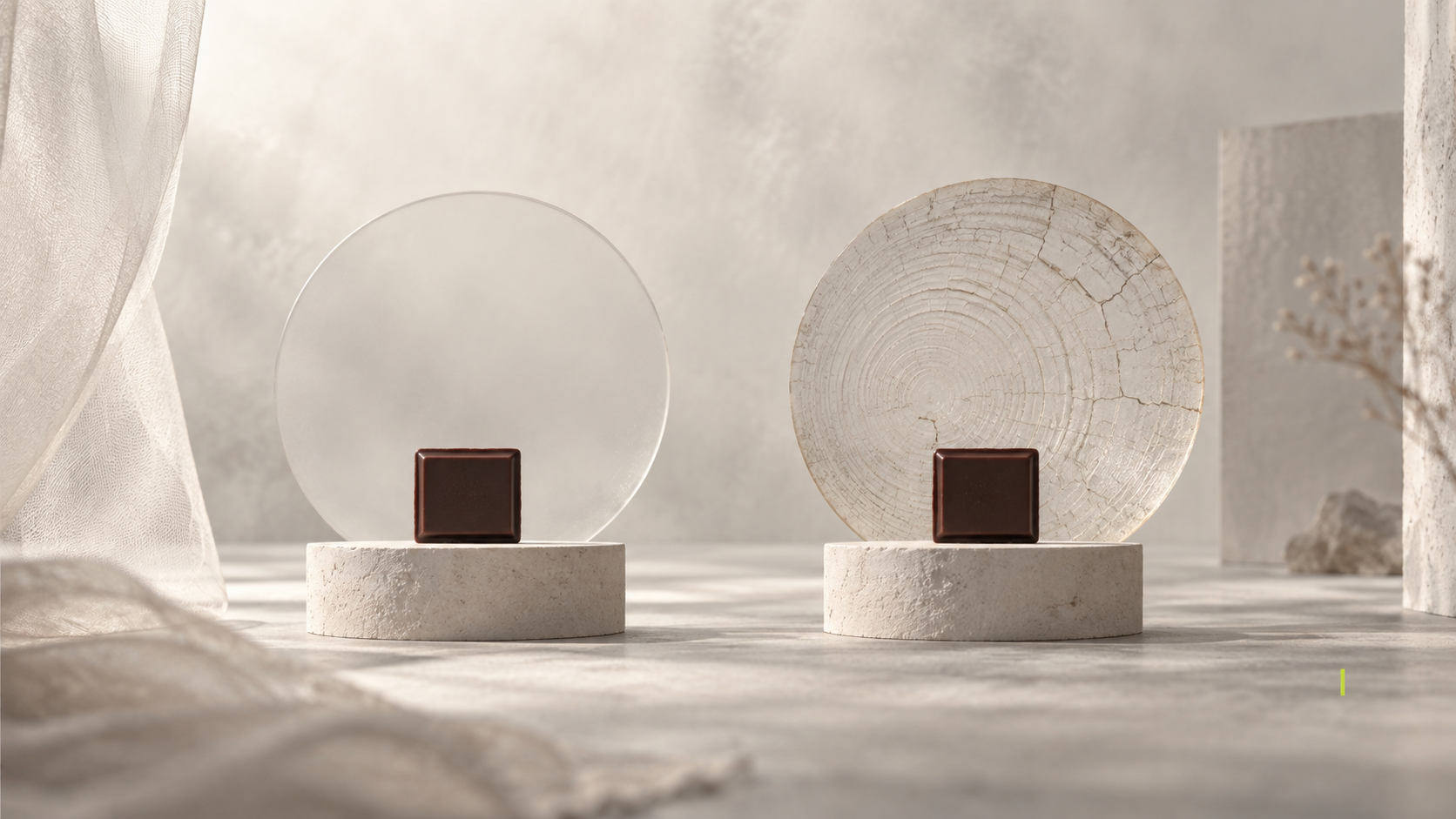
A square of chocolate does not acquire a richer flavor when someone gives its brand an older founding date. The ingredients stay put. The cocoa does not mature retroactively. Yet the experience of tasting it can still change.
That is the strange possibility behind longevity bias: when something is described as older, we may experience it as better, even when nothing about the thing itself has changed.
The longevity bias: when age becomes a quality signal
In 2010, psychologists Scott Eidelman, Jennifer Pattershall, and Christian S. Crandall published a five-study investigation called Longer is better. Across policies, acupuncture, art, nature, and food, they varied how long something was said to have existed and measured how people evaluated it.
The recurring pattern was simple: the longer something was believed to have existed, the more favorably it tended to be judged. The researchers described time in existence as a heuristic, a quick cue the mind can use when making an evaluation.
A heuristic is not the same as a foolish mistake. When information is incomplete, age can sometimes carry useful evidence. A tool that has survived years of use may be durable. A business that has lasted may have satisfied enough customers to remain open. A craft tradition may preserve knowledge accumulated through practice.
The trouble begins when age stops being one clue among many and quietly becomes a verdict.
Age is factual. Quality is a judgment. The mind can smuggle one into the other.
The chocolate that acquired 70 years without changing
The cleanest demonstration came from chocolate. Participants sampled the same European chocolate, but they received different stories about the brand. One group was told that the brand had been on the market since 1937, roughly 73 years. Another was told that it had existed since 2007, roughly three years.
The participants who heard the older-brand story evaluated the chocolate more favorably. They also reported more willingness to eat it again or buy it. According to the University of Arkansas summary of the research, no participant correctly recognized the brand, and when people explained their ratings, they talked about taste, texture, sweetness, and smell rather than the date.
That detail matters. The manipulation concerned the perceived age of the brand, not the physical age of the chocolate. The study does not show that old chocolate tastes good. It shows that a brand-history label can influence how an otherwise identical sample is evaluated.
This resembles the way a comparison point can change felt value. In Grasply's article on why old prices feel right, the number alone is not the whole experience; the benchmark around it helps determine whether it feels fair or outrageous. Here, the product stayed the same while the story around its age changed.
Why paintings and trees can borrow beauty from time
The researchers did not stop with products. In one experiment, participants viewed the same reproduction of Max Beckmann's Moon Landscape. Some were told it was created in 1905, others in 2005. The supposedly older painting received higher aesthetic ratings.
In another experiment, participants saw the same photograph and description of a live oak. Only the alleged age changed. Again, greater stated age produced higher ratings of aesthetic value.
The visual information was held constant. No extra brushwork appeared in the older painting condition. The tree did not grow another ring between questionnaires. What changed was the meaning participants attached to what they saw.
This is why the finding is more interesting than a preference for antiques. It suggests that age knowledge can become part of perception. We do not always experience an object first and interpret it later; interpretation can arrive early enough to color the experience itself.
A related pattern appears when effort changes value. The IKEA effect describes how contributing labor can make an object feel more valuable to its maker than it does to outsiders. Longevity bias is not the same mechanism, but the family resemblance is useful: an object's physical properties do not exhaust its felt value. The story of its history, ownership, or creation can travel with it.
A useful shortcut can still mislead
An old restaurant may still be open because its food is excellent. An old medical practice may have survived because it works. But survival has other possible causes too: habit, power, regulation, limited alternatives, nostalgia, or simple luck. Longevity tells us that something persisted. It does not tell us why.
Later research adds an important boundary. A 2016 paper on change resistance and longevity bias found that the tendency was not universal: people who were more accepting of change sometimes showed a weaker effect or even evaluated older practices less favorably. The original experiments were also individual studies with relatively small, mostly student samples. They reveal a repeatable possibility, not a law governing every person and every object.
Consumer research has refined the brand version too. A later study found that older-brand claims can increase perceived quality, but the effect was not simply bigger with every added year. It depended partly on brand heritage, the product category, and perceived competition. Context does not merely activate the shortcut; it shapes what the shortcut means.
There is another crucial limit. These studies changed the perceived age of the object, practice, or brand. They did not test whether people become more appreciative of old things as they themselves age. That may be an interesting question, but it is a different question.
How to inspect an age cue before trusting it
When age makes something feel impressive, pause long enough to separate the signal from the conclusion. Five questions help:
- What exactly is old? The object, the brand, the design, the institution, or merely the story attached to it?
- What stayed constant? Would you judge the same taste, image, argument, or product differently without the date?
- What survival process operated? Did quality help it last, or could habit, power, scarcity, or protection explain the longevity?
- What independent evidence exists? Look for performance, craftsmanship, outcomes, sources, or blind comparisons.
- Would newness bias you in the opposite direction? Novelty can be a shortcut too. New does not automatically mean improved.
This habit is especially useful when learning. A claim repeated for generations is not true because it is old, just as a new explanation is not correct because it sounds current. When saving an idea in notes or a Second Brain, preserve its provenance: who made the claim, what evidence supports it, and what would change your mind. A date should help you locate an idea, not decide whether to believe it.
What age can and cannot tell you
Longevity can be evidence. It is not a verdict.
The age of an oak may deepen our sense of awe because we understand what it has survived. The date on a painting may add cultural meaning. A long-running brand may genuinely possess experience and trust. None of that requires pretending that age is irrelevant.
The more careful lesson is to notice when history has moved from context into proof. Ask whether the years reveal durability, accumulated knowledge, and real selection, or whether the calendar has simply placed a flattering frame around the object.
Before asking whether something is old, ask what survived: the quality, the evidence, or merely the story.
Sources and further reading
- Eidelman, Pattershall, and Crandall, Longer is better, Journal of Experimental Social Psychology (2010).
- University of Arkansas, Longer Is Better? We Seem to Think So (2010).
- Shockley, Rosen, and Rios, Change resistance moderates existence and longevity biases, Social Influence (2016).
- Pecot and Merchant, Why and when is older better?, Journal of Business Research (2022).